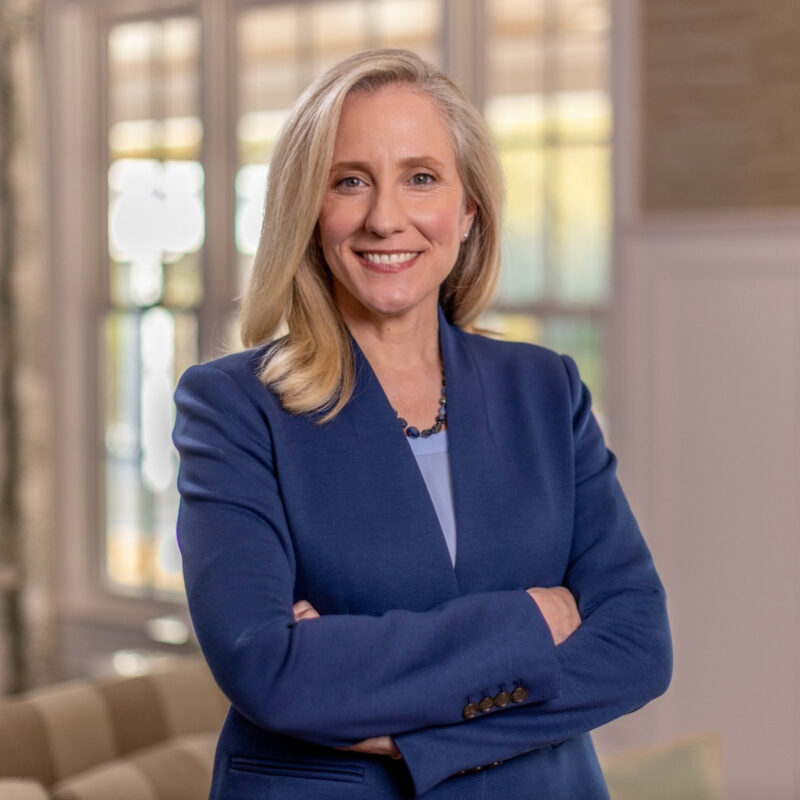
Andy Block, lead author of the In Their Own Voices report, spoke with members of the law enforcement community about the research project in September. Supplied photo.
Gun violence in Virginia is down from a 2021 peak, but there’s still work to be done across the Commonwealth, according to University of Virginia researchers. By examining how fear, social media, and loss of community resources contribute to gun violence among youth and young adults, the researchers hope to inform effective policy, from the community to the federal level.
The research and policy recommendations draw on 58 interviews: 31 with adult community stakeholders and 27 with youth or young adults who self-identified as growing up in neighborhoods experiencing gun violence. In addition to hearing from people who live in gun violence hotspots in the Roanoke, Tidewater, and Richmond areas, researchers spoke with 12 people from the greater Charlottesville area because of its proximity to UVA.
Lead report author Andy Block was joined by co-authors and researchers Lucy Guanara and Trae Watkins at a December 4 virtual roundtable examining the findings.
“Gun violence is not equally distributed across Virginia. There are certain areas that have much, much higher rates than the state average,” said Block, who previously served as director of the Virginia Department of Juvenile Justice.
Drawing on University of Chicago behavioral economist Jens Ludwig’s concept of “unforgiving places,” the report blames violence on stressful environments that make it harder for people to stop, think, and choose not to pull a trigger.
UVA’s report lists three primary, linked causes of worsening gun violence among young Virginians: loss of resources during the pandemic, social media, and fear.
“The communities that are the most vulnerable for gun violence, those are also places that, in a lot of cases, had the least resources, and so were the most impacted by changes from the COVID-19 pandemic,” said Guanara. “Services shut down and those services were never recovered. … That sense of community, togetherness, or watchfulness, has not really come back.”
Being stuck at home for virtual schooling left students bored, idle, and with more opportunities to get in trouble. Of the 15 Virginia zip codes with the highest rates of juvenile shootings, 13 had chronic absenteeism rates notably higher than the state average for 2024-25, and 12 had below-average graduation rates for the 2023-2024 school year, according to the report.
Isolated during the pandemic, kids turned more to social media. But the report argues that those services fed kids music and imagery that glamorized and encouraged violence.
“When you see something violent—or something violent is shown—on social media, the algorithm amplifies that video more than it amplifies anything else,” said Watkins, who conducted the interviews with youth and young adults for the report. “It wants violence. It wants drama; when people are … making comments that are causing conflict and issues and challenges … that amplifies that video more than anything does.”
Feuds that begin online spill into reality. Social media lets kids taunt potential rivals while announcing their own locations, daring challengers to show up and start a fight.
Social media also intensified opportunities to bully. Young interviewees said they skipped fistfights in favor of guns because no one wanted the humiliation of being caught on video losing a brawl.
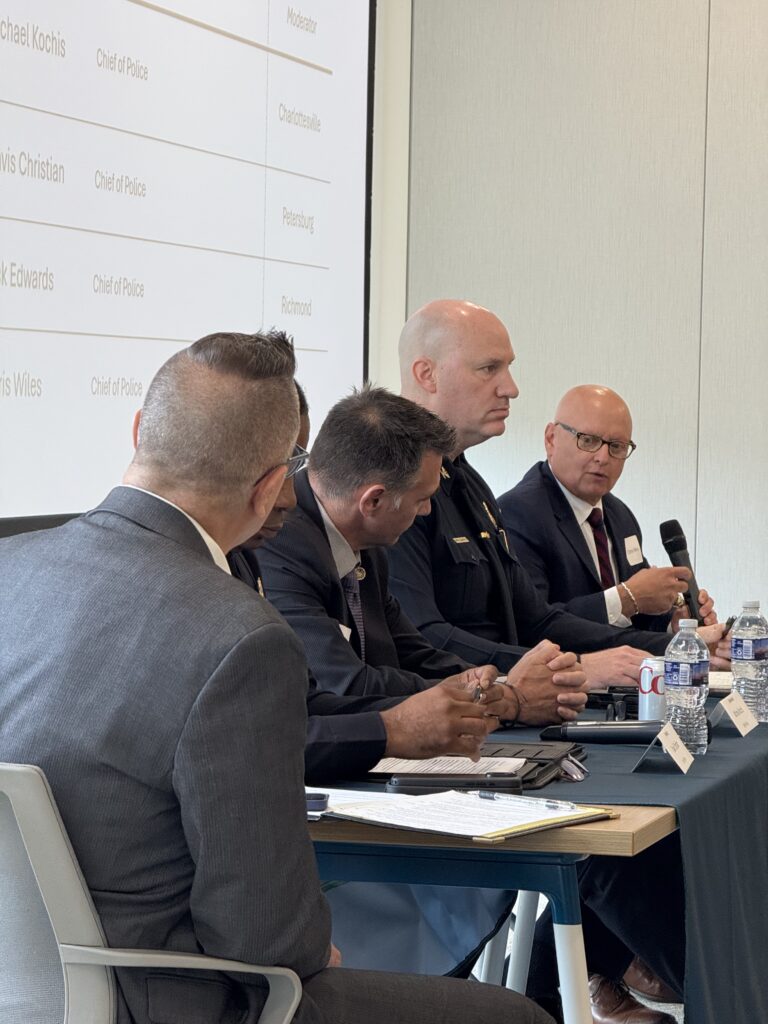
“If a young person is assaulted, and gets involved in a fight, and it’s filmed, that’s captured, and it’s played over and over and over again,” said Stephen Jenkins, chief of Portsmouth Police Department, who joined researchers for the roundtable.
Between the loss of resources and escalating effects of social media, youth interviewed for the project reported that fear drove their desire to carry guns. One 16-year-old quoted in the report said they didn’t want to be the only one unarmed, and felt that guns were “the only way to solve a problem.”
“[The youth interviewed] all felt the level or sense of fear—whether it was fear at school, fear in the community, or fear in the home—that was a very common theme,” said Watkins.
Instead of a statewide approach, the report recommends policymakers focus resources on communities most affected by gun violence.
“For most of the Commonwealth, most kids … or young adults go outside. They go to school, they go to the store, they go to their friends, they don’t feel they have to carry a gun to be safe. But in some places in Virginia, that’s not the case, unfortunately,” said Block. “When you put young people in those communities who’ve been exposed to trauma and violence and they have guns, bad things are going to happen.”
In addition to new programs, the report’s findings support ongoing efforts, including Ceasefire Virginia, which mixes tougher, targeted prosecution of offenders with funding for community-based intervention groups. Ceasefire Virginia has coincided with a 33.5 percent statewide drop in annual homicides since it launched in 2022. But the reduction in combined killings, assaults, and robberies has been lower—9 percent, compared to a statewide 13 percent—in communities where the program has focused.
According to FBI crime data, homicide rates in Virginia hit a recent peak of 0.67 per 100,000 people in 2021—the highest rate since 1997. The state’s homicides declined nearly 50 percent from 2021-2024, compared to a 27 percent reduction nationwide. Over that period, firearms were used in 77 percent of Virginia homicides, and 55 percent of offenders and 41 percent of victims were between 10 and 29 years old.
Beyond the data, UVA’s report sees a path forward through sharing the lived experience of those affected by and working to prevent gun violence.
“When a problem’s not that acute, [the] government loses attention and it moves on to the next crisis,” said Block. “It’s incredibly important that we keep up the momentum that we’ve started to generate, and we support the holistic responses that communities across Virginia are taking as they approach these problems, and so that we can, I think, realistically get to a point where kids feel safe enough to not have to carry a gun when they go outside.”
“Numbers are important, but a lot of times stories are more important and changing people’s minds or helping people really understand a problem,” said Guanara. “That’s one of the things we’re hoping to contribute—the stories to help policymakers understand what’s really going on and what needs to happen.”
With reporting by Nathan Alderman.